How to build a packaging approval process that prevents costly errors
The packaging industry was valued at around $1.11 trillion in 2025, and is projected to grow to $1.59 trillion in value by 2034.
Behind these numbers is a process with far less visibility — and far more risk. Every package that reaches a consumer has passed through a complex approval process involving designers, marketers, legal teams, compliance officers, and production partners.
When this process works, packaging launches on time, meets regulatory requirements, and protects brand integrity. When it fails, companies face expensive reprints, compliance violations, and production delays — all from preventable errors that slipped through review.
The costs are real: label errors alone accounted for 45.5% of food recalls in 2024, costing the industry an estimated $1.92 billion in direct recall expenses — and that’s before accounting for reputational damage, lost sales, regulatory fines, and the long-term erosion of customer trust.
Given these stakes, any company producing packaging cannot afford to treat the approval process as an afterthought. Yet many organizations still rely on fragmented workflows, manual tracking, and unclear accountability, leaving critical decisions vulnerable to the exact errors that drive these costly outcomes.
To understand where these failures occur and how to prevent them, this article covers what a packaging approval process is, how it breaks down in practice, and what teams can do to run one that is consistent, compliant, and built to scale.
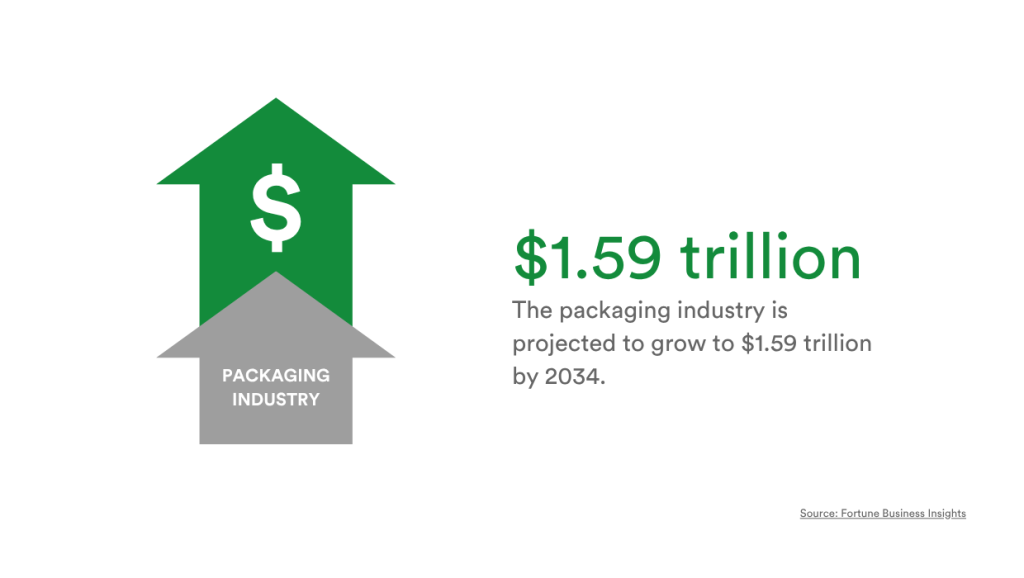
Strong growth is projected for the packaging industry.
What is a packaging approval process?
A packaging approval process is how teams check, review, and sign off on packaging artwork before it goes to print. It helps make sure the right version is used, required information is included, and nothing critical is missed.
When the process isn’t clear or well-managed, small mistakes can quickly turn into costly reprints, compliance issues, and production delays.
An outdated allergen warning can trigger a recall. A version approved by marketing but not legal can go to print with inaccurate claims. A barcode placed over a fold line can become unscannable at retail.
The approval process covers both creative review and regulatory validation. Teams must confirm that the design is visually correct and on-brand, while also verifying that required legal, safety, and compliance information is accurate, up to date, and correctly applied.
For example, for a pharmaceutical product, this could mean checking the brand colors match company guidelines and the dosage information is prominent and legible (the creative), while also confirming safety warnings use FDA-mandated language and contraindication details (the regulatory).
A packaging approval process includes many elements, but it almost always involves checking:
- Copy accuracy and marketing claims
- Translations (if applicable)
- Barcodes, colors, fonts, and images
- Legal disclaimers, safety symbols and regulatory certifications
- Expiration date placement, and regional requirements before artwork is approved for production.
In industries where a single packaging mistake can trigger recalls or fines, there’s no room for sloppy approvals.
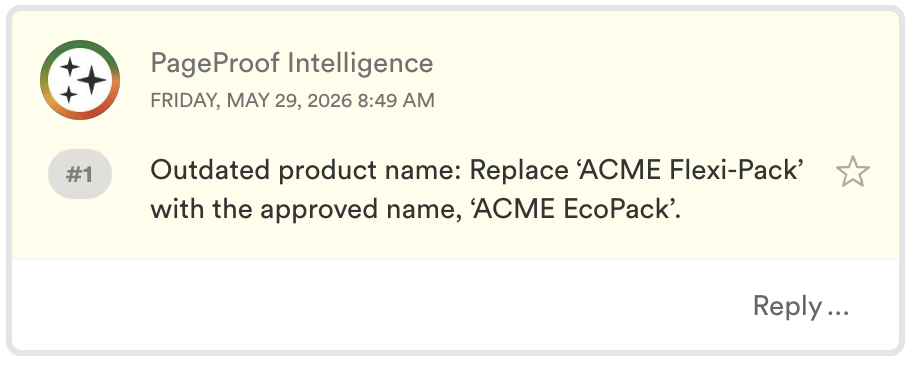
A copy accuracy check is a key part of a successful packaging approval process.
Which industries are most exposed to packaging errors?
Packaging approval processes are vital for companies where packaging accuracy, compliance, and consistency are critical to operating safely and at scale. The most common sectors are:
- Pharmaceuticals — ensuring correct dosage information, contraindications, batch numbers, and regulatory warnings appear exactly as approved
- Medical devices — verifying sterile labeling, usage instructions, safety symbols, and regulatory markings (e.g., UDI, CE marks)
- Food and beverage — checking ingredient lists, allergen declarations, nutrition facts, expiration dates, and country-specific regulations
- Cosmetics and personal care — validating ingredient disclosures, claims (e.g., “dermatologist tested”), warnings, and multilingual requirements
- Chemical and industrial products — confirming hazard symbols, handling instructions, safety data references, and compliance with transport regulations
- Consumer packaged goods (CPG) — maintaining brand consistency, accurate product descriptions, legal text, and barcode integrity across markets
- Infant and child products — ensuring age warnings, safety instructions, and mandatory legal statements are present and correct
- Alcohol and tobacco — enforcing government-mandated warnings, tax markings, and restricted claims.
Despite operating in high-stakes categories, many companies in these industries still rely on fragmented tools and informal workflows that break down under real-world pressure — leaving them just as exposed to the errors they can least afford.
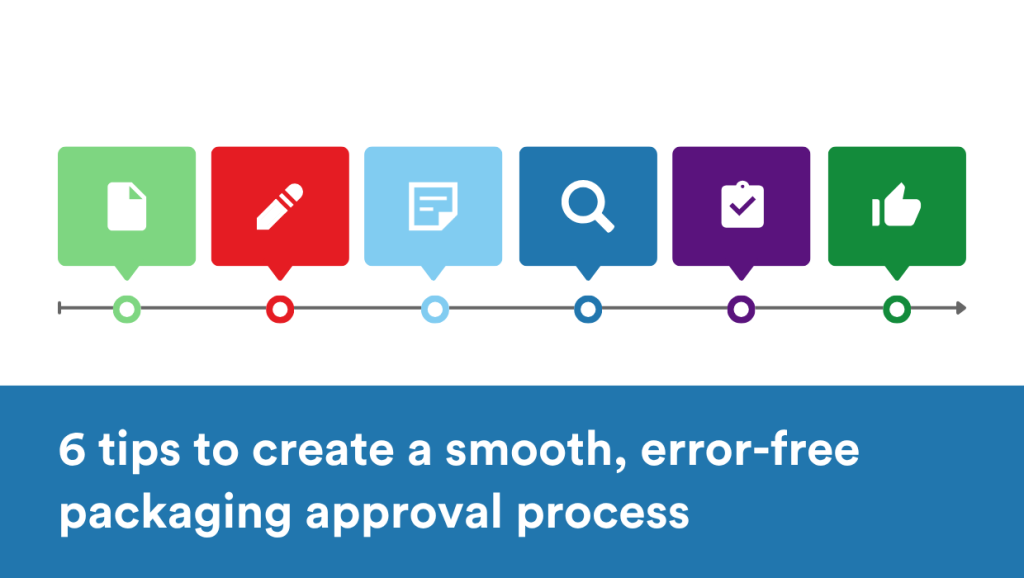
6 tips on building a smooth, error-free packaging approval process
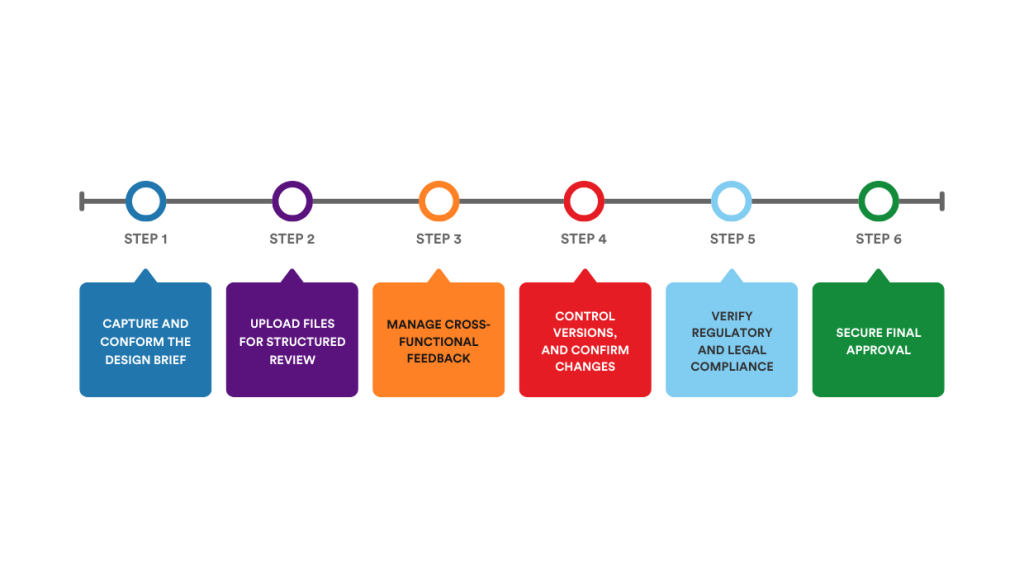
A six-step packaging approval workflow: from design brief to final approval.
1. Capture and confirm the design brief with documented stakeholder sign-off
Every approval process starts with a detailed brief that sets requirements, regulatory constraints, and brand expectations for all stakeholders. A good brief covers:
- Product specifications: Dimensions, weight, packaging material, required regulatory labels
- Brand and design guidelines: Logo usage, color palette, typography, imagery, and mandatory creative elements
- Regulatory and legal requirements: Allergen declarations, safety warnings, compliance obligations, and region-specific rules
- Target market and languages: Where the packaging will be sold and which languages are required.
To validate this stage: store the brief centrally, require explicit sign-off from each key stakeholder (marketing, regulatory, legal, production), and keep a versioned, timestamped record of any updates.
2. Upload artwork files and run a structured internal review
Once the brief is finalized, the design team delivers the first complete set of artwork files. This stage is where alignment on creative intent, brand consistency, and regulatory awareness begins.
Key activities in this stage include:
- File consolidation: Upload all packaging panels, labels, and supporting assets to an approval platform
- Internal stakeholder review: Ensure marketing, compliance, and legal have access to the files for initial review
- Preliminary compliance check: Regulatory or legal representatives can identify obvious omissions before formal review.
To validate this stage: confirm uploaded files match the brief, track that each reviewer has completed their review, capture feedback directly on the artwork (not in emails or chats), and keep versions controlled and traceable.
3. Manage cross-functional feedback and validate all annotations before revision
Marketing, compliance, and legal review the artwork in sequence, ideally through a defined workflow in an online proofing or project management tool.
Key activities in this stage include:
- Cross-functional review: Marketing, legal, regulatory, and other stakeholders review the artwork within the workflow
- On-asset commenting: All feedback and change requests are added directly to the artwork files
- Compliance and legal validation: Mandatory statements, symbols, claims, and region-specific requirements are verified
- Feedback alignment: Conflicting or unclear comments are identified and resolved before revisions begin
- Feedback lock: Comments are finalized and ready for execution by the design team.
To validate this stage: confirm all required reviewers have completed their review, verify feedback lives on the artwork itself, ensure each comment has a timestamp, reviewer, and clear action, and maintain an auditable record of comments and approvals.
4. Control versions and confirm that every requested change has been implemented
At this stage, the design team updates the artwork based on the validated feedback from previous review rounds. The focus is on making sure all requested changes are accurately implemented and fully traceable, with no confusion about which version is current. Multiple rounds of revisions may be needed depending on the project’s complexity.
Key activities in this stage include:
- Updating the artwork according to approved annotations
- New files are re-uploaded with automatically incremented version numbers
- Previous versions are retained for comparison and audit purposes
- Version-to-version changes are reviewed to confirm accuracy.
To validate this stage: use a version-controlled system (no vague labels like “final” or “latest”), link each revision to its predecessor, run version comparisons to confirm requested changes were made, and ensure only the latest approved version moves forward.
5. Verify regulatory and legal compliance against market-specific requirements
Before final approval, regulatory and legal teams verify that the artwork meets all legal, compliance, and market-specific requirements. This stage ensures the packaging is legally fit for sale in its intended markets.
Key activities in this stage include:
- Review of mandatory legal text, warnings, symbols, and claims
- Verification of region- and market-specific regulatory requirements
- Validation of language accuracy and required translations
- Confirmation that no unapproved claims or statements remain.
To validate this stage: use a version-controlled system (no vague labels like “final” or “latest”), link each revision to its predecessor, run version comparisons to confirm requested changes were made, and ensure only the latest approved version moves forward.
6. Secure final approval and confirm print-ready release
In this final stage of the approval process. All stakeholders formally approve the artwork, the file is locked, and the packaging is confirmed as print-ready with no further changes permitted.
Key activities in this stage include:
- Final artwork review against all prior approvals
- Formal sign-off by all required stakeholders
- Locking of the approved artwork version
- Prepare and release print-ready files.
To validate this stage: confirm the approved file is the only version released to production, require each stakeholder to complete a final “Approve” action, ensure approvals are version-specific and timestamped, and generate a final approval report showing approvers, version, and date.
At this point, the process is controlled, traceable, and ready for production, assuming all previous steps have been correctly followed.
What does a packaging approval process look like that goes wrong?
To see why the above tips matter, consider this fictional example of a fragmented approval process.
NutriSnackCo, a UK-based food manufacturer, is 45 days from launching a new proten bar in the US and Canada.
They have an approval process, but it runs on email threads and PDFs, with no visibility into who has reviewed what — creating delays and compliance risk at every stage.
Initial artwork
Feedback arrives via separate emails from marketing, legal, and compliance — flagging a logo change and missing French allergen information, and labeling questions — with no consolidated record or clear ownership.
Revisions and version control
The agency sends back updated files as “v2”, “v3_final,” and “final_file,” forcing stakeholders to manually compare PDFs since it’s unclear which version is current or what’s been approved.
Regulatory review
By the time compliance does its final review, it finds inconsistencies between the US and Canadian nutrition facts layouts and still-incomplete allergen text — issues that went unnoticed for rounds, now triggering late changes right before launch.
The root cause isn’t the people involved, but the process: without structure, version control, and visibility built in, even experienced teams stay vulnerable to the same breakdowns.
How online proofing software would have prevented NutriSnackCo’s approval breakdown
NutriSnackCo had 45 days, all the right stakeholders, and a process that looked fine on paper. But because artwork and feedback moved through email — three teams, three threads, no visibility into what was outstanding or actioned — there was no reliable way to verify or audit at any stage.
The fix is an efficient proofing process paired with software to support each stage. For most packaging teams, that’s an online proofing solution: a single platform to upload artwork, assign reviewers, collect feedback on files, track versions, and record every approval, with a clear audit trail instead of scattered emails and shared drives.
Here’s how it would have addressed NutriSnackCo’s breakdowns directly:
1. One version of the file, and everyone knows which one it is
NutriSnackCo had “v2”, “v3,” and “final_file” circulating with no clarity on what was current or approved. A proofing solution versions every revision automatically and ties approvals to the specific files reviewed, so reviewers always know which file is current and what was approved.
2. The right people are assigned to review at every stage
NutriSnackCo’s project manager forwarded artwork to three teams and hoped for the best, with no defined review order. A proofing platform assigns reviewers when the proof is created and runs steps in sequence or parallel as needed — marketing first, then legal, then compliance, with the design team looped in to see and action feedback directly.
3. Feedback lives on the artwork, not across three inboxes
Marketing, compliance, and legal each emailed the agency separately, so nobody had a full picture of what was raised or resolved. In a proofing solution, all feedback lives on the artwork itself: each team comments in turn, the design team sees and implements it all in one place, and the project manager uploads the revised version for the next review.
4. Approval doesn’t rely on someone’s word
NutriSnackCo’s reviewers had to manually compare PDFs and reread emails to confirm changes were made; the process was slow, error-prone, and low-confidence. A proofing tool lets reviewers compare versions side by side; in PageProof, Smart Compare highlights visual differences down to the pixel, and Smart Check flags changes in metadata like dimensions, colors, and fonts — catching both visible and hidden differences early.
5. There’s a record of every decision
The compliance team’s final review turned up issues — the nutrition facts inconsistency and incomplete allergen text — that had gone unnoticed for rounds because there was no consolidated record. With online proofing, that record builds automatically: every comment, revision, and approval is timestamped and attributed, tied to specific versions. PageProof’s audit log captures every view, download, and status change, so compliance never has to reconstruct history from memory.
The overall impact for NutriSnackCo
With structured online proofing, NutriSnackCo had:
- One version of truth
- Every reviewer’s status visible
- Every change request traceable
- Compliance with full visibility from day one
- Final approval documented and version-specific
Instead of firefighting late-stage regulatory issues, their packaging would have gone through controlled quality gates, which would have reduced risk, protected the launch timeline, and avoided preventable rework.
Ensure packaging accuracy with PageProof
PageProof is a leading online proofing platform built to help packaging teams catch errors before artwork goes to print.
Teams can upload packaging artwork and label files, assign structured review workflows, annotate directly on each panel, and track every change. Approvals are version-specific and fully auditable, so every comment, revision, and sign-off is traceable to the exact version of the packaging that will go to print.
With PageProof, feedback is consolidated, compliance checks are enforced early, and version control is airtight. catch errors before they reach production, avoid the delays caused by late-stage rework, and prevent costly recalls — while ensuring that every product leaving the facility is accurate, compliant, and consistent with brand standards.
See PageProof in action.
Discover how top creative teams cut approval times and keep every review secure.