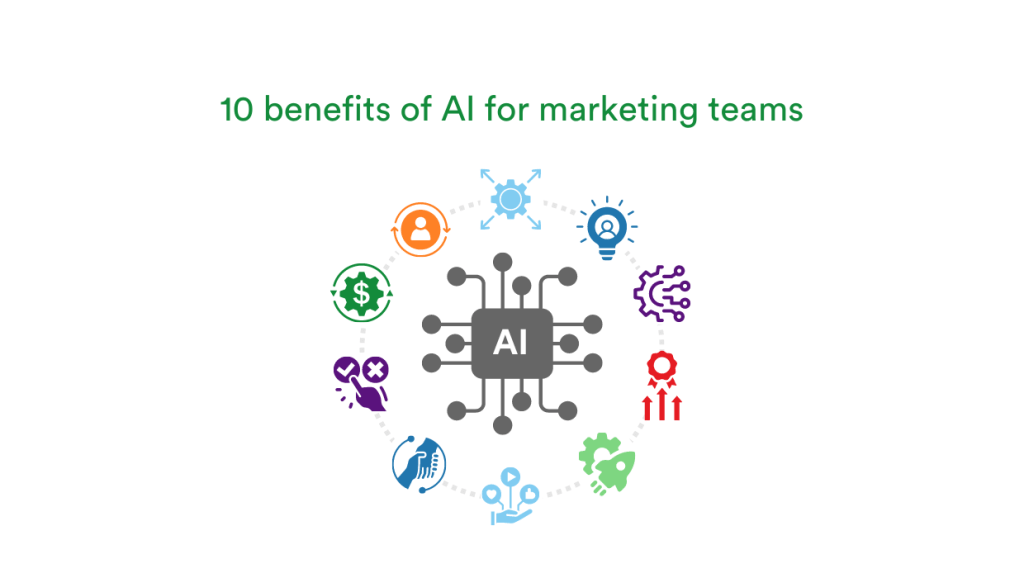
10 benefits of artificial intelligence (AI) in marketing teams
AI is changing the game for marketing teams. It helps create personalized content, automates repetitive tasks, and gives deep insights into customer behavior. With tools like machine learning and natural language processing, marketers can do their jobs better and faster. Did you know that 55% of organizations have started using AI? It’s becoming a crucial part of marketing strategy.
Let’s dive into the top ten benefits AI brings to marketing.
Key takeaways
- Automating repetitive tasks allows your marketing team to focus on strategy and creativity.
- Deep customer insights enable marketers to create more personalized and effective campaigns.
- Streamlined content creation and approval speeds up workflows and ensures high-quality output.
- Optimized ad spend boosts ROI and enhances overall campaign performance.
How is AI used in marketing?
AI is all about making things easier and more efficient. It can automate decisions and analyze data quickly, which means marketers can focus on what really matters: connecting with their audience. By understanding customer behavior through AI, teams can craft more effective strategies.
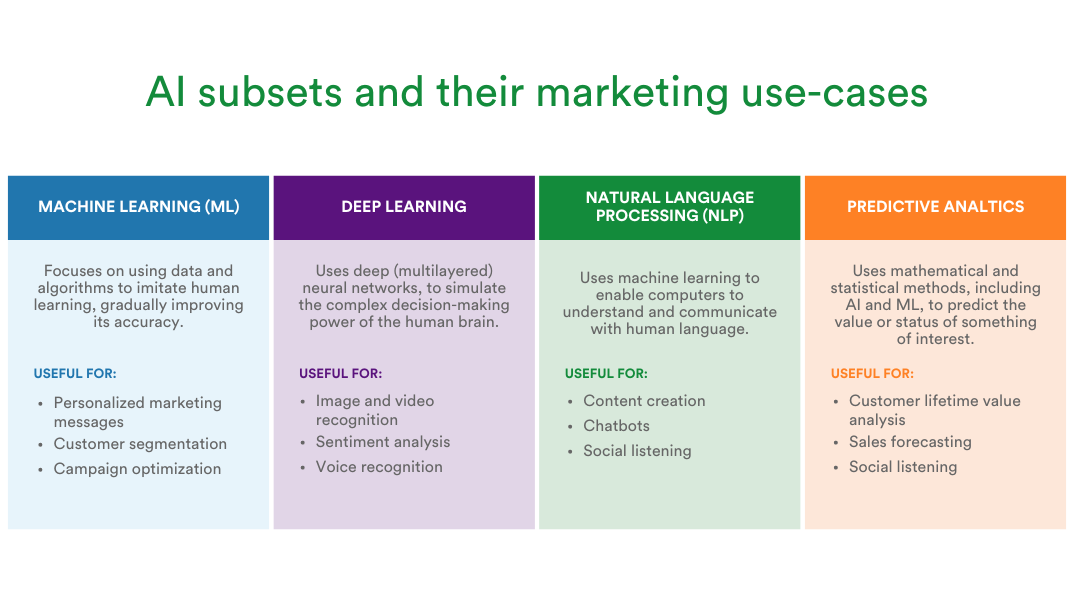
Machine Learning (ML)
Machine learning (ML) is a branch of AI and computer science that focuses on using data and algorithms to imitate human learning, gradually improving its accuracy.
Useful for: customer segmentation, personalized marketing messages, and campaign optimization.
Deep Learning
Deep learning is a subset of ML that uses multilayered neural networks, called deep neural networks, to simulate the complex decision-making power of the human brain.
Useful for: image and video recognition, sentiment analysis, and voice recognition.
Natural Language Processing (NLP)
NLP is a subfield of computer science and AI that uses machine learning to enable computers to understand and communicate with human language.
Useful for: content creation, chatbots, and social listening.
Predictive Analytics
Predictive analytics uses mathematical and statistical methods, including AI and ML, to predict the value or status of something of interest.
Useful for: sales forecasting, customer lifetime value analysis, and churn prediction.
Marketing disciplines that can benefit from AI
By integrating AI into your marketing toolkit, your team can make more informed and impactful decisions, staying ahead of the curve.
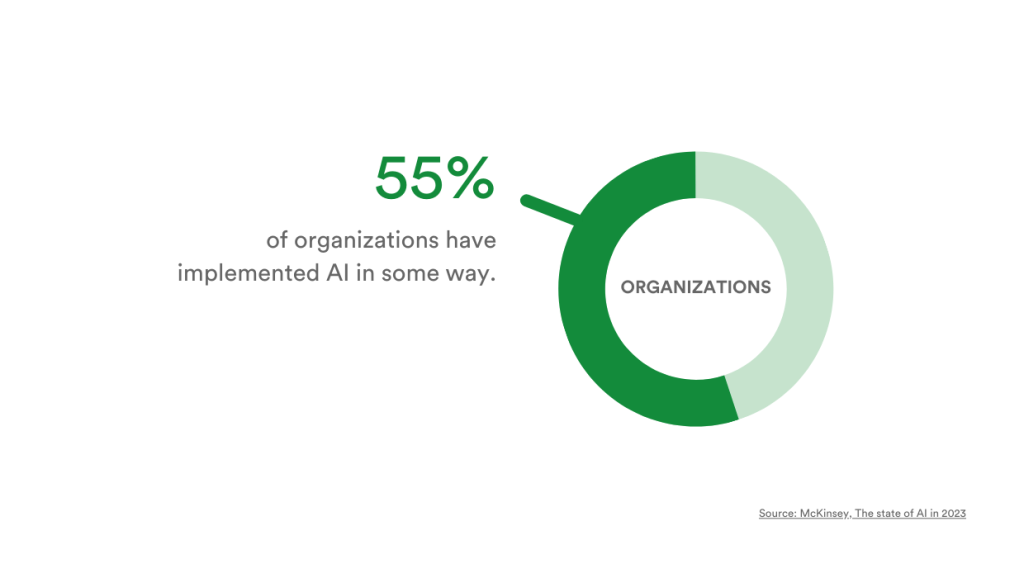
Source: McKinsey – The state of AI in 2023
Seven fields of marketing that can significantly benefit from AI include:
- SEO (search engine optimization): AI helps in keyword research, content optimization, and predicting search trends.
- SEM (search engine marketing): AI optimizes ad targeting, bidding strategies, and ad performance analysis.
- Content marketing and copywriting: AI tools can generate content ideas, optimize copy for SEO, content performance analysis, and even draft initial versions of marketing materials.
- Email marketing: AI enhances personalization through segmentation, predictive analytics for optimal send times, and automated email content generation.
- Social media marketing: AI analyzes trends, automates posting schedules, and optimizes ad targeting and performance on platforms like Facebook and Instagram. AI lead generation streamlines prospect targeting and engagement, ensuring campaigns reach the right audience at the right time.
- E-commerce: AI optimizes product recommendations, pricing strategies, and inventory management in online retail environments.
For example, according to a recent study, seven in 10 marketers (71%) expect generative AI will help reduce busy work and allow them to focus more on impactful tasks. They also predict generative AI will save them five hours of work per week – which amounts to over a month per year.
By leveraging AI across these areas, your teams’ marketing efforts can become more efficient, targeted, and ultimately, more successful.
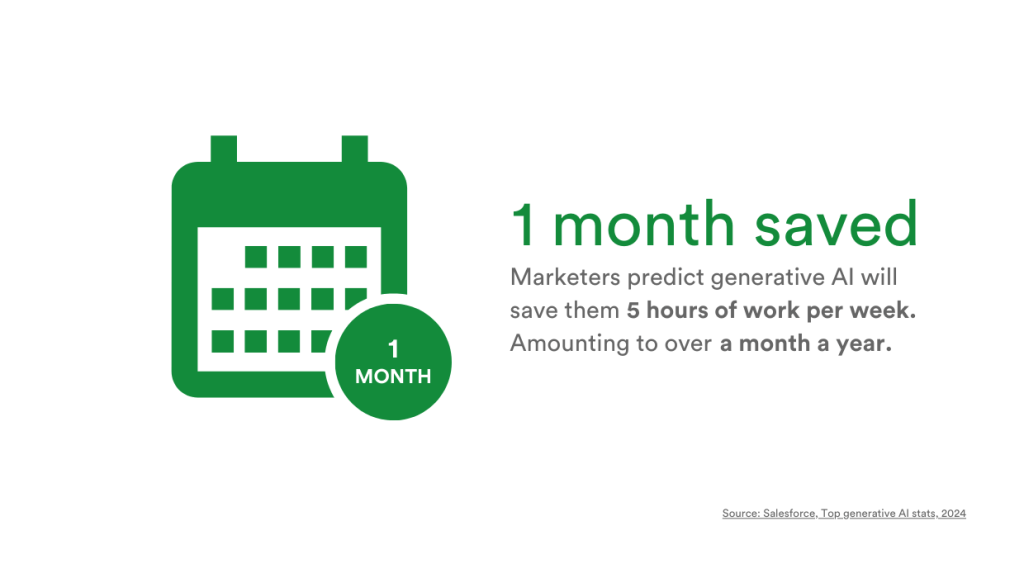
Source: SalesForce – Top Generative AI Statistics for 2024
The benefits of AI for your marketing team
1. Improved personalization
AI empowers marketing teams to create deeply personalized customer interactions through advanced data analysis and predictive algorithms, segmenting audiences, and crafting tailored messages.
2. Enhanced customer insights
Leveraging AI, marketing teams gain actionable insights from customer data to guide marketing strategies, using predictive analytics to anticipate behaviors and customer preferences.
3. Optimized content creation
Streamlined by AI workflow automation, content creation, creative workflows, and online proofing tools help to ensure efficient review and approval cycles through departments, resulting in content that meets brand guidelines and is produced on schedule.
4. Efficient campaign management
AI automates campaign scheduling, optimization, and performance tracking based on historical data insights, refining strategies quickly for maximum impact in the market.
5. Streamlined customer support
AI-powered chatbots can enhance round-the-clock customer support with natural language processing, improving response times and customer satisfaction.
6. Data-driven decision-making
Accelerated by AI, marketing teams gain precise insights for strategic decision-making, optimizing campaigns, and driving measurable results.
7. Competitive advantage
AI identifies competitive trends and market opportunities through comprehensive analysis, enabling flexibility in your marketing efforts to maintain a competitive advantage.
8. Improved ROI and cost efficiency
AI optimizes advertising spend by targeting high-value audiences and streamlining operations, maximizing ROI and budget efficiency across campaigns.
9. Enhanced customer engagement
AI-driven recommendations and personalized offers deepen engagement and foster loyalty by proactively engaging customers with tailored content and promotions.
10. Improved scalability and speed
AI facilitates scalable efforts across channels, accelerating campaign execution and adaptation to meet evolving customer expectations effectively.
Famous campaigns that have used AI
The well-known brands below illustrate how organizations leverage AI to innovate their marketing strategies, enhance customer experiences, and drive audience engagement.
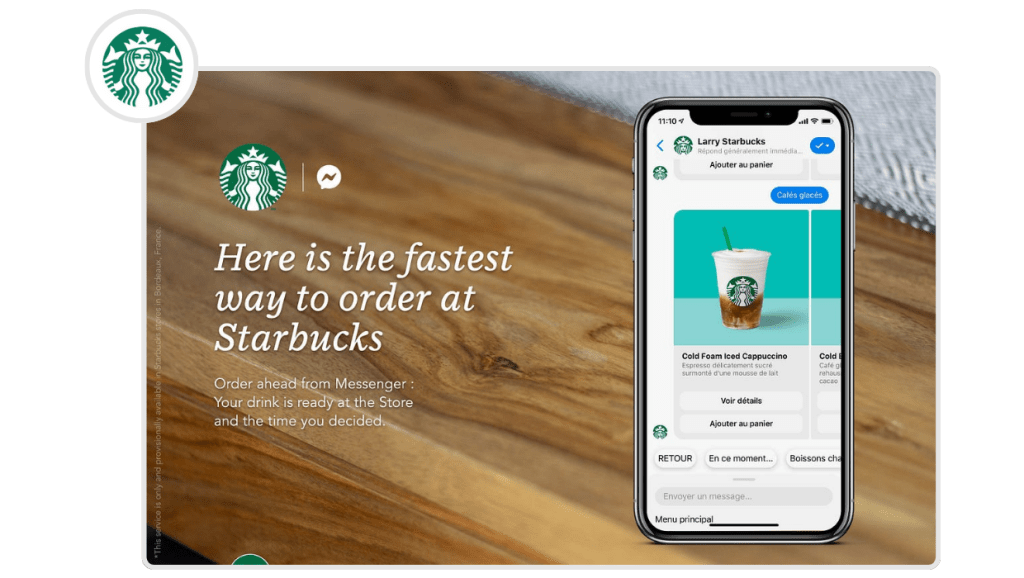
Starbucks’ AI voice-powered barista
Starbucks has revolutionized their customer experience with AI voice-powered barista services.
Through intuitive messaging and voice recognition on their app, customers can effortlessly order drinks and food remotely, eliminating the need to visit physical stores.
Netflix’s AI-centric user content suggestion tool
Netflix’s AI recommendation engine has transformed how viewers discover content.
By analyzing extensive user data — viewing habits, ratings, searches, and more — the platform customizes content suggestions for each viewer, enhancing user satisfaction and engagement.
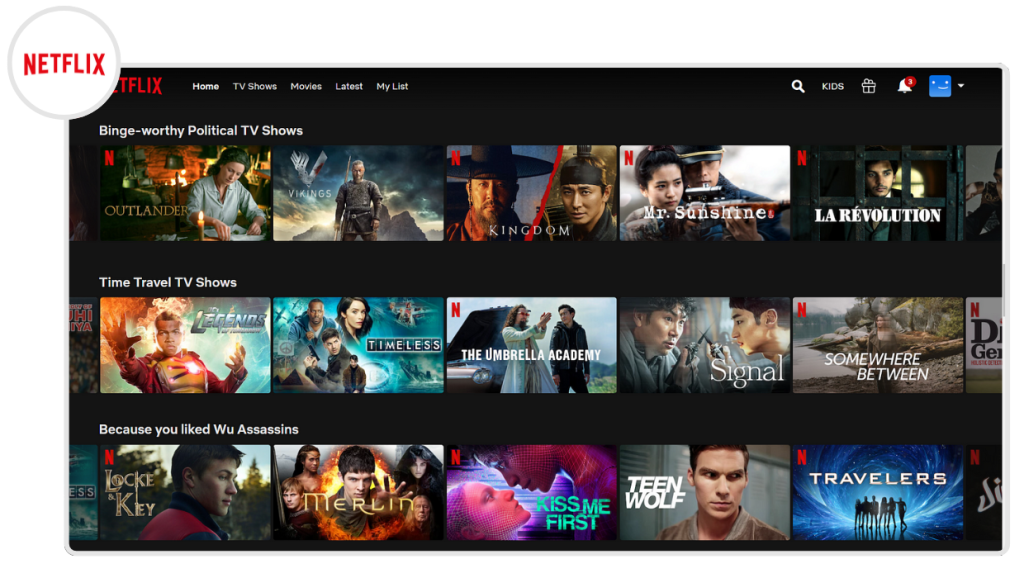
Netflix’s AI content suggestion tool.
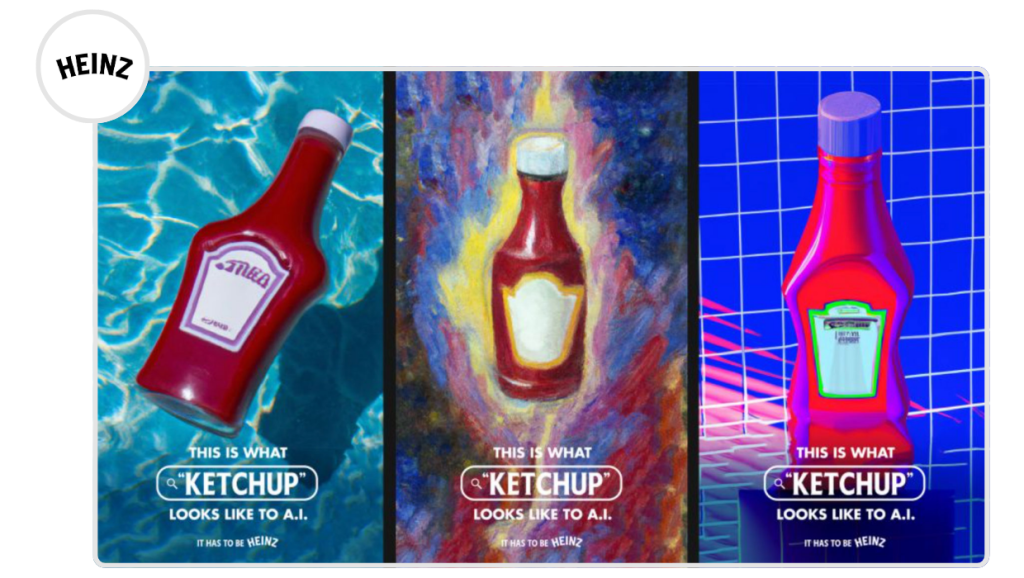
Heinz uses AI image generator for iconic ketchup ads
Building on the success of its ‘Draw Ketchup’ campaign, Heinz leveraged AI image generation to create captivating visuals.
This innovative approach allowed Heinz to produce compelling advertisements featuring its iconic ketchup bottles, resonating with their consumers.
Coca-Cola’s creative AI platform
Coca-Cola introduced an AI platform that empowers digital creators worldwide.
This platform enables artists to generate original artwork using Coca-Cola’s iconic creative elements, fostering innovation and creativity in digital marketing campaigns.

Coca-Cola’s AI platform for digital creators.
Why should CMOs care about AI?
With a staggering 250% growth in AI adoption recently, AI isn’t just a buzzword — it’s a major efficiency driver for marketing departments aiming to stay ahead.
Understanding customer needs and desires and creating on-brand content at speed has never been more crucial, and AI empowers marketers to delve deeper than ever before.
By leveraging AI, brands can enhance customer experiences, create great content at scale in collaboration with PageProof, and ultimately drive substantial growth.
With projections indicating significant revenue and productivity increases, investing in AI isn’t just a trend – it’s a strategic necessity to future-proof your organization.
Introducing PageProof Intelligence™
PageProof Intelligence™ amplifies the way marketing and creative teams review and approve creative content.
Through a series of proprietary algorithms, artificial intelligence (AI), and data predictions through machine learning (ML), PageProof Intelligence™ enhances every facet of your organization’s use of the PageProof platform, whilst keeping your data secure.
PageProof Intelligence™ is rolling out now, and continuing beyond 2024 to enhance and optimize the review and approval of creative work.
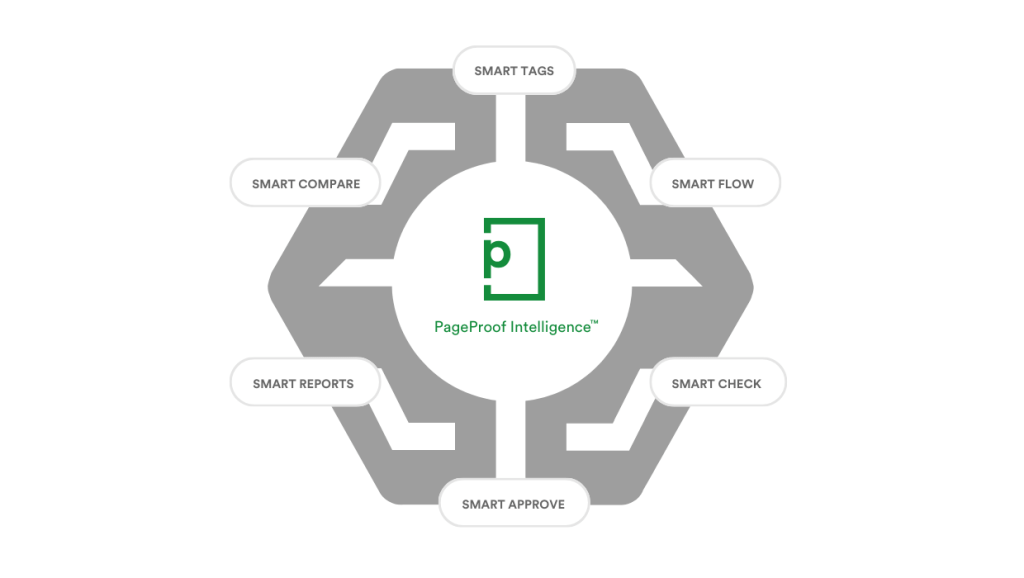
PageProof Intelligence™ amplifies the way marketing and creative teams review and approve creative content.
FAQs
How widely is AI being used in marketing?
According to a recent McKinsey survey, 55% of organizations have implemented AI in some form, demonstrating its growing adoption in marketing for enhancing efficiency and effectiveness.
How does AI benefit marketing teams?
Marketing teams can benefit from AI by automating tasks, improving personalization, and gaining deep customer insights. AI enhances campaign management, streamlines customer support, and enables data-driven decision-making, resulting in more efficient and effective marketing strategies.
Resources
- https://www.salesforce.com/news/stories/generative-ai-statistics/
- https://www.mckinsey.com/capabilities/quantumblack/our-insights/the-state-of-ai-in-2023-generative-ais-breakout-year