How AI workflow automation accelerates the creative approval process
Creative review and approval processes are the backbone of marketing teams and agencies worldwide, ensuring quality control, compliance, and alignment with brand guidelines. Incorporating artificial intelligence (AI) workflow automation into these processes can dramatically streamline operations, ensuring that organizations keep pace with the increased demands of modern business environments.
The creative approval process once resembled an inefficient relay race, with documents handed off between desks or even sent via courier to external stakeholders or clients. This evolved into receiving feedback via phone calls, emailed screenshots, poorly marked-up files, and hustling to arrange meetings for when everyone is available to discuss creative over screen share.
Progressive companies turned to digital workflow automation, such as those found in leading online proofing platforms. This resulted in long-sought-after efficiencies and cost savings.
The next phase of automation has arrived: artificial intelligence.
Key takeaways
- AI workflow automation speeds up creative approvals by reducing manual tasks and streamlining processes.
- Predictive analytics in AI identifies bottlenecks and optimizes review timelines for faster outcomes.
- Automated error detection ensures consistency and accuracy across all creative assets.
- AI helps teams scale by managing larger volumes of creative work without compromising quality.
According to CO—, run by the U.S. Chamber of Commerce, over 90% of companies reported that AI improved their success by minimizing errors, accelerating growth, and freeing up valuable time. Accordingly, businesses need to innovate and integrate AI into their processes to avoid stagnation and thrive in today’s competitive environment.
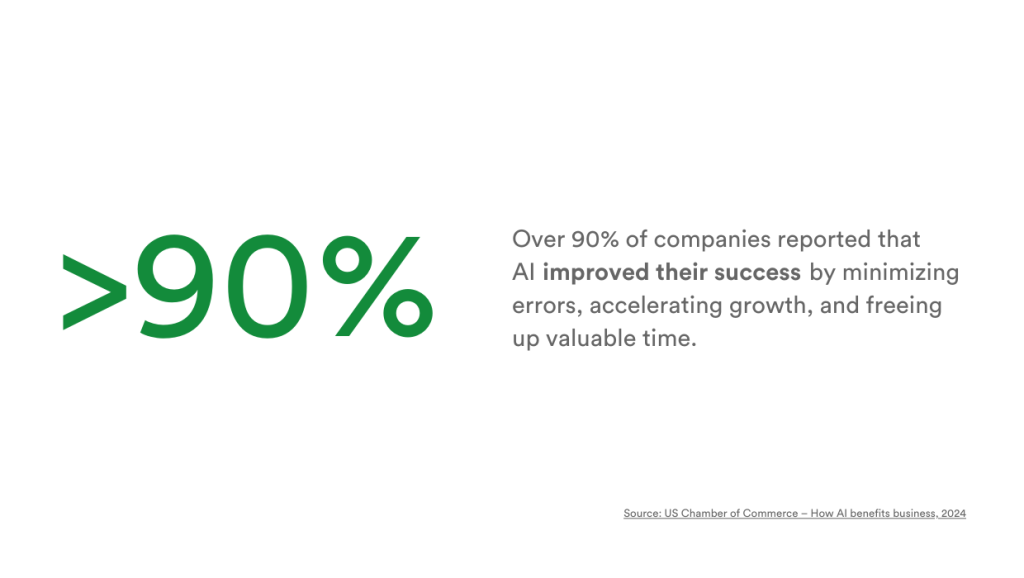
Source: US Chamber of Commerce, How AI benefits business in 2024.
Read on to learn how AI is helping to amplify the way teams review and approve creative work.
What is AI workflow automation?
Workflow automation, powered by AI, is revolutionizing how businesses operate by optimizing and streamlining their processes. It’s all about leveraging artificial intelligence and machine learning technology to direct tasks and information across systems and users within an organization. This not only removes repetitive tasks and manual data entry but also adds automatic routing, ensuring tasks move efficiently through pre-defined workflows.
This highlights its role in not just sustaining but also fostering business growth and resilience. AI simplifies manual, human-dependent processes, allowing organizations to operate more efficiently and effectively.
With AI at the helm, inefficient back-and-forth communications become obsolete, streamlining workflows significantly. This not only saves time but also reduces errors and ensures consistent workflows, which is especially crucial for approval processes. It’s not surprising that the adoption of AI has surged – 55% of respondents in a recent survey by McKinsey reported that their organization has implemented AI.
How does AI help creative workflows?
In modern creative workflow management, AI plays an important role, particularly through predictive analytics. Take online proofing tools, for example; enhancing feedback and approval on diverse content types is possible through predictive analytics. Analyzing historical data from past review cycles streamlines workflows, anticipates potential bottlenecks, discerning feedback patterns, and recommends optimal review pathways.
It helps to forecast which review stages take the most time, allowing organizations to allocate resources and speed up the overall review timeline. With machine learning algorithms, predictive analytics also draws insights from past feedback and preemptively flags common mistakes or areas needing enhancement to reviewers during the proofing phase. This not only cuts revision timelines but also elevates the precision and quality of final outputs.
Through these AI-driven improvements, creative workflows not only become more efficient but foster a culture of continuous improvement, ensuring that each iteration of creative work builds upon prior insights for a higher standard of outcomes.
The benefits of AI in workflow and approval automation
Adding AI to workflow automation helps in the review and approval process by introducing significant efficiencies and reducing the need for manual intervention.
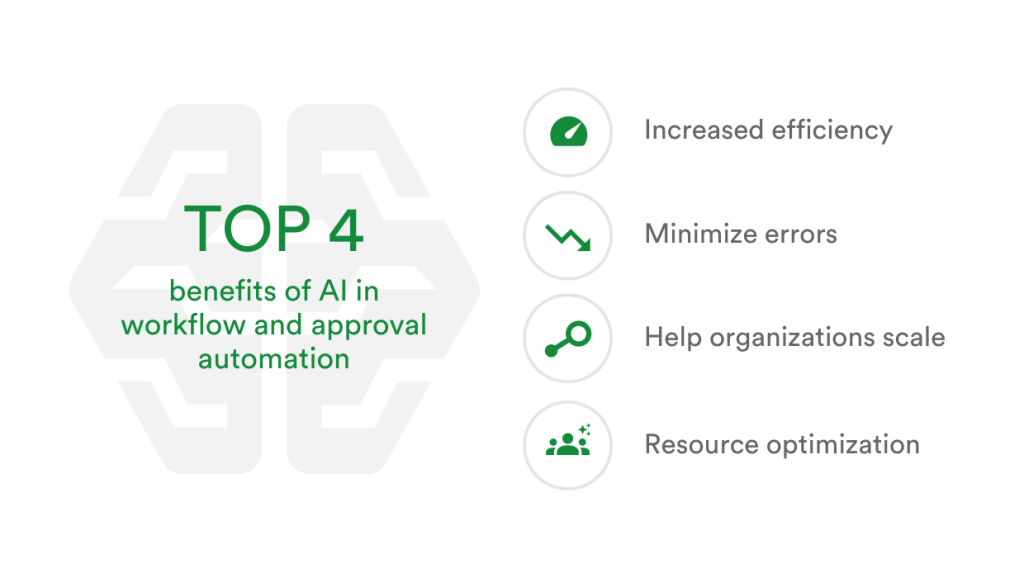
The top 4 benefits of AI in workflow and approval automation.
1. Reducing manual tasks
One of the primary benefits is automating repetitive tasks. By leveraging AI, organizations can automate the scanning of documents for errors, inconsistencies, or compliance issues, which significantly reduces the necessity for manual review.
Automation ensures that files swiftly route to the appropriate stakeholders based on predefined rules or criteria, streamlining the workflow. Additionally, AI technology can monitor documents or processes to ensure compliance with regulations and standards. It promptly flags deviations for further review, thereby maintaining the integrity of the review process.
2. Minimizing errors
AI contributes to minimizing errors, leading to consistency in decision-making. Automated checks verify adherence to brand guidelines, correct spelling, validate links, assess accessibility considerations, and confirm the accuracy of QR codes and barcodes. This level of scrutiny ensures that all aspects of a document or creative work meet the required standards before approval. By systematically applying these checks, AI reduces the likelihood of human error and maintains a high level of quality and consistency across all reviewed marketing materials.
3. Helping organizations scale
AI-driven review and approval systems enable teams to manage a larger volume of creative output without compromising on quality. This capability is particularly beneficial for marketing teams and creative agencies that need to review and approve a vast array of creative work at scale. AI helps these teams maintain high standards of quality while handling increased workloads, and it ensures that they meticulously review and approve all creative outputs on time. According to a report by Accenture, 84% of executives believe they won’t achieve their growth objectives unless they scale AI. This underscores the critical role AI plays not only in maintaining quality and efficiency in creative processes but also in driving overall business growth.
4. Resource optimization
AI aids in resource optimization by prioritizing tasks and optimizing workflows. By freeing team members from monotonous manual jobs, AI allows them to focus on more impactful tasks that drive business growth.
This efficient allocation of resources ensures that the team utilizes its skills and expertise where they are most needed, enhancing overall productivity and effectiveness. As a result, AI not only streamlines the review and approval process but also empowers teams to contribute more strategically to the organization’s success.
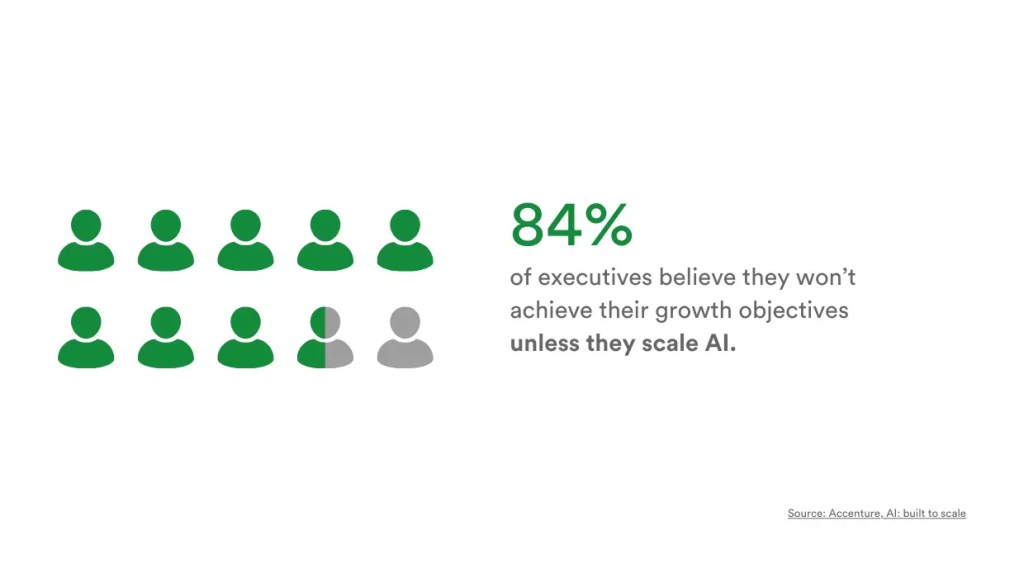
Source: Accenture, AI: built to scale.
Examples of AI workflow automation
AI-driven workflow automation revolutionizes various industries by streamlining processes, enhancing creativity, and improving customer engagement. By leveraging AI technologies, businesses can efficiently produce high-quality content, targeted marketing campaigns, and immersive experiences tailored to their industries.
Some examples of how AI workflow automation can benefit various industries include:
- Retail: Use AI to create captivating social media posts and video ads for new products, driving both online and in-store traffic by generating copy, scheduling content, and optimizing engagement.
- Health, medical, & pharmaceutical: Develop a brochure and interactive website for a new medication using AI to create content, design the website, and handle HTML development, ensuring informative content for healthcare professionals and patients.
- Banking, finance, & insurance: Design an email marketing campaign and educational webinar series for a new financial planning service. AI provides initial outlines for emails, enhancing effectiveness and reach.
- Automotive, transport, & machinery: Produce a high-quality video tour and VR experience of the latest vehicle model. AI assists with website coding and integrates tech-savvy features to attract and engage buyers.
- Food & beverage: Create eye-catching packaging designs and a social media influencer campaign for a new line of organic snacks. AI-powered workflows ensure timely approval, increasing brand visibility and engagement.
- Creative agencies: Develop a branded content series and case study videos showcasing successful client projects. AI offers rough script outlines, attracting new business and demonstrating agency expertise.
- Aerospace, tourism, & hospitality: Create an engaging travel blog and an augmented reality app featuring exotic destinations. AI aids in content creation and keyword research, ensuring SEO optimization and boosting bookings.
No matter the industry, embracing AI can revolutionize workflows, enhance creativity, and drive growth. The graphic below highlights the USA GDP by industry, showcasing the potential for AI integration across various sectors.
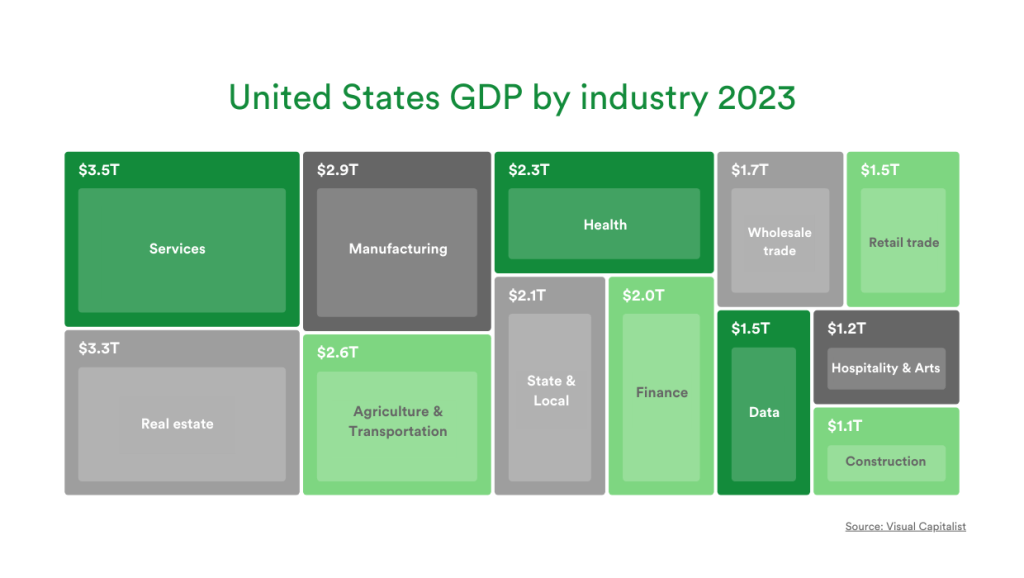
Source: Visual Capitalist, Visualizing U.S. GDP by Industry in 2023.
How to automate workflows with AI
Map out your processes
Before implementing AI into your creative review and approval process, it’s crucial to decide on a project management framework. The right framework will depend on factors like your industry, company size, and team dynamics. Choose a process map that provides the appropriate level of detail and aligns with your objectives.
Below are some of the most common types of process maps:
- Flowchart: A flowchart focuses on understanding the general flow of information through the process. It is a graphic that combines symbols and arrows to represent the sequence of steps in a process. One of the most popular types of process maps.
- Swimlane diagram: A swimlane diagram organizes steps by stakeholders or departments. Each swimlane symbolizes a distinct group involved in the process, and the diagram illustrates the flow of the process between the various groups.
- Value stream map: A value stream map combines symbols and arrows to represent the sequence of steps in a process. It is used to discover areas of waste and inefficiency in the process and to improve the overall flow of value.
- Process flow diagram: A process flow diagram uses symbols to show the different steps in a process. It is similar to a flowchart but has more information about each step.
- SIPOC diagram: A SIPOC (Supply, Input, Process, Output, Customer) is a diagram that provides a high-level overview of a process. It outlines the essential inputs, outputs, and stakeholders involved in the process.

5 common project management frameworks.
Choosing the right AI automation tool
Every business unit is different in terms of people, processes, goals, and objectives. There are AI automation tools to match the wide range of business needs. Some examples include:
Project management
Tools that assist with task scheduling, resource allocation, progress tracking, and collaboration are essential for efficient project management. With AI, these tools become even more powerful, offering predictive analytics to anticipate potential delays, optimize resource distribution, and automate routine tasks. AI-driven insights help teams make informed decisions, streamline workflows, and complete projects on time and within budget, enhancing overall efficiency and effectiveness.
- Examples include: monday.com, Asana, Trello, and ClickUp.
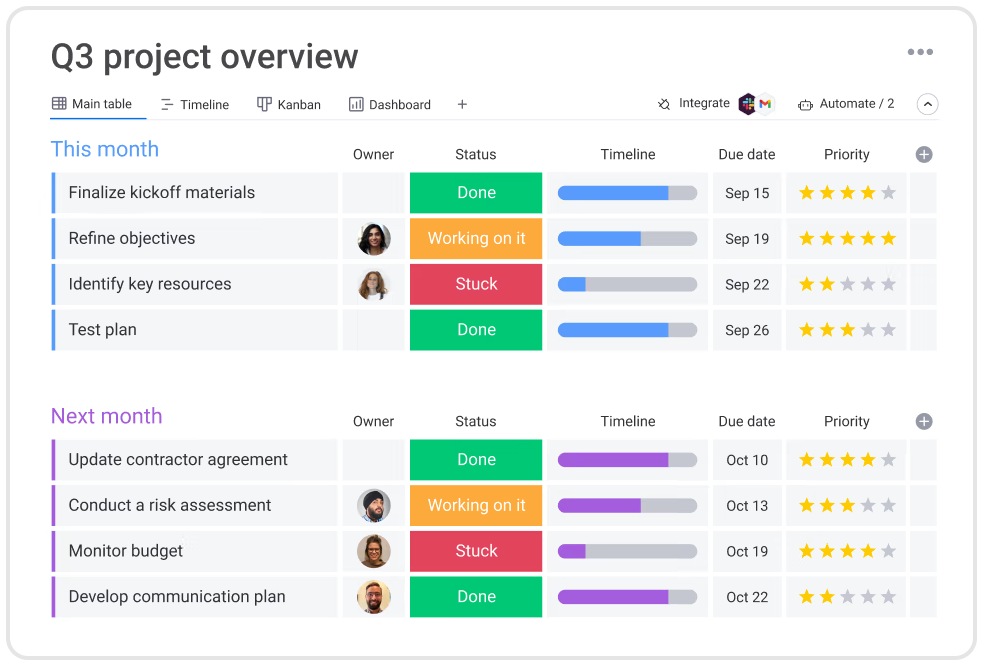
The monday.com project management dashboard.
Online proofing and collaboration
Platforms that facilitate digital content review, annotations, feedback, and version control empower teams to collaborate on documents, designs, videos, and other content. They let teams leave comments, suggest edits, and track changes in real time. AI-driven online proofing tools enhance the accuracy and speed of content development by centralizing all feedback and revisions, making collaboration more effective and intuitive.
- Examples include: PageProof and Workfront Proof.
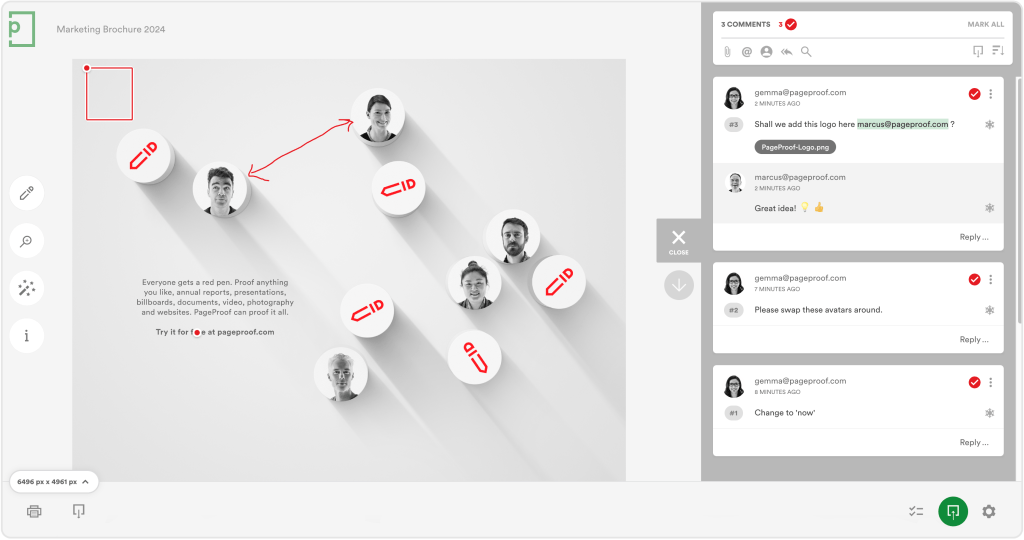
The PageProof proofing screen with feedback provided from stakeholders.
Customer relationship management (CRM)
These systems help businesses organize and analyze customer information, automate sales and marketing activities, and enhance customer service. By leveraging AI, they provide advanced features such as lead tracking, personalized email marketing, predictive sales forecasting, and intelligent customer segmentation.
- Examples include: Salesforce, HubSpot CRM, and Zoho CRM.
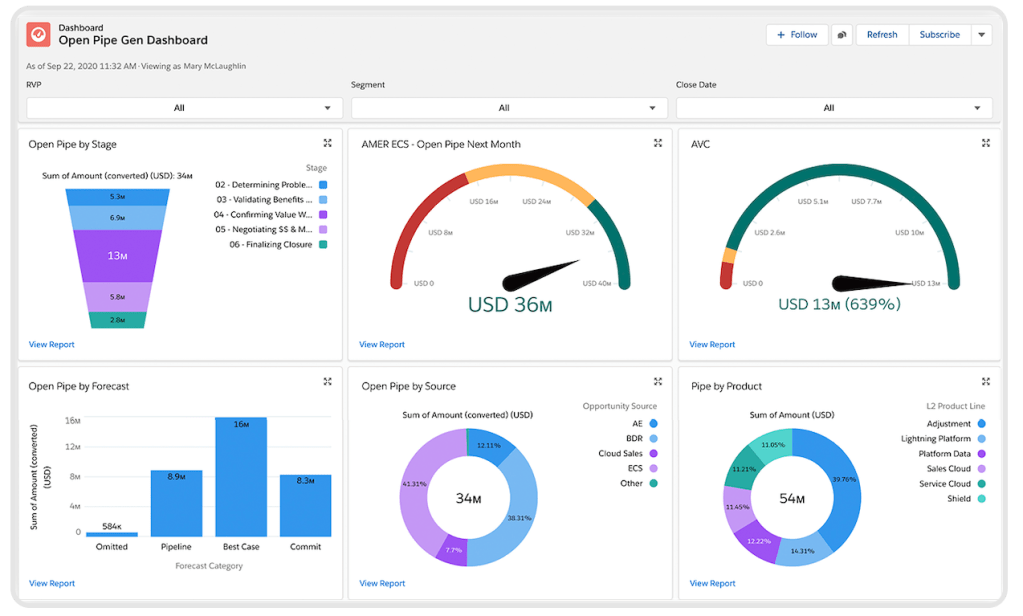
The Salesforce dashboard.
Customer support and chatbots
AI chatbots and virtual assistants provide customer support, resolve queries, and address issues. These tools offer instant, automated responses to customer inquiries, which reduces response times and improves customer satisfaction. They handle a wide range of tasks, from answering frequently asked questions to troubleshooting issues and escalating complex problems to human agents.
By using these chatbots and sending email surveys to customers after these interactions companies cana gather valuable insights into customer satisfaction and identify areas for improvement in their customer support processes.
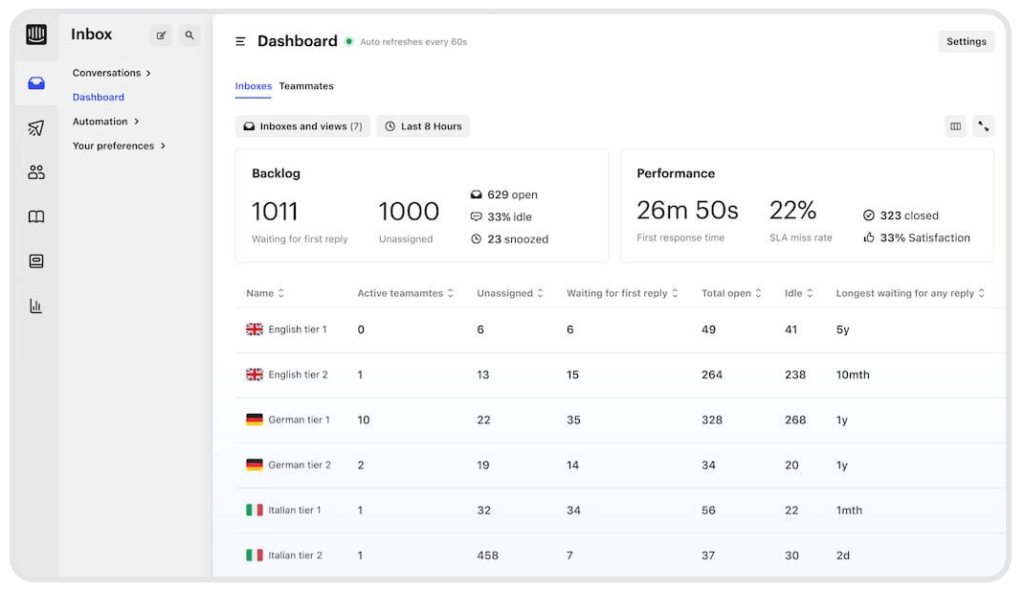
The Intercom dashboard.
Data analysis and business intelligence
AI tools process large datasets, offer insights, and support decision-making through advanced analytics. These tools help businesses extract valuable insights from data by performing complex analyses, visualizing data trends, and generating reports. They enable organizations to make data-driven decisions, identify opportunities for growth, and optimize operations by understanding patterns and trends in their data.
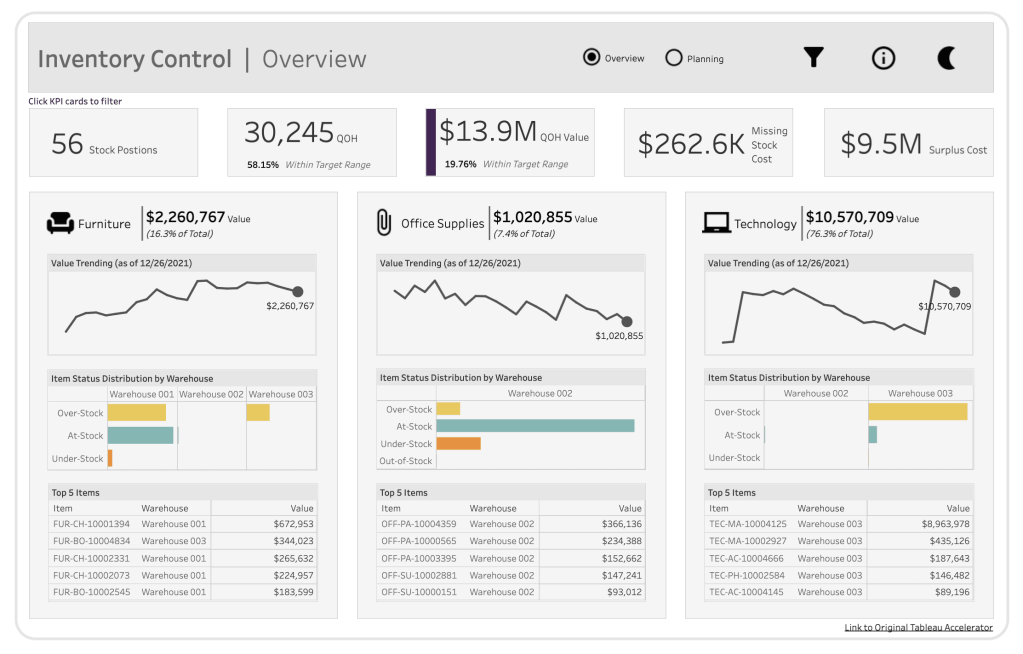
The Tableau dashboard.
Choosing MarTech tools in 2024
When evaluating martech tools, you should consider the unique needs of your team and address any shortcomings in current workflows. For example, outdated proofing processes often lead to missed feedback, underscoring the necessity for updated solutions that cater to diverse departmental requirements.
Given the bloated nature of many martech stacks, the simplicity of navigation cannot be overstated—especially when it comes to staff and client uptake of new software. A user-friendly interface can mitigate this steep learning curve and ensure staff adoption, thereby maximizing the return on your investment.
Martech.org revealed the top 7 factors for choosing MarTech tools in 2024, highlighting the importance of seamless integration capabilities, user-friendly interfaces, and robust data security. AI is also playing a growing role, improving these factors through advanced analytics, automation, and personalized user experiences that meet the changing demands of MarTech.
- Enhanced customer experience: In 2024, the focus on CX is narrowing the gap between how companies perceive their customer experience and what customers actually experience. Success in this area will build loyalty and drive profitability.
- Cost efficiency in MarTech: According to Gartner, martech investments constitute a quarter of marketing budgets, yet only a third of these tools’ features are typically utilized. Choose tools wisely to maximize functionality and avoid unnecessary expenditure.
- Enhanced data management: AI will play a crucial role in enriching customer experiences through more robust content. Marketers must prioritize comprehensive data management to avoid losing assets and wasting human resources on retrieval.
- ROI measurement capability: Generative AI is often viewed narrowly as a productivity tool by many executives. Seek tools that provide clear ROI metrics or calculators to justify investment effectively.
- AI-augmented support systems: In 2024, AI will complement rather than replace human interactions in customer experiences. Look for systems that enhance efficiency for both marketers and service agents.
- Data security and privacy: As concerns about digital privacy grow, martech tools must prioritize data security and compliance with global regulations. Transparency and customer consent will be key in data collection and usage practices.
This aligns with findings from the Gartner Budget Priorities report, which shows that technology is the primary focus for CFOs planning budget increases in 2024, as the escalating demand for artificial intelligence tools significantly drives this focus.
As businesses allocate more funds towards AI, choosing martech tools that effectively incorporate AI functionalities becomes crucial for maintaining a competitive advantage.
Webhooks: an easy way to transfer data between your MarTech tools
Webhooks play a vital role in automating data flow between systems, which enhances the effectiveness of AI integration within those systems. When specific events occur, webhooks send data about the proof to other platforms. This allows teams to update systems like monday.com, Asana, Microsoft Teams, Slack, Trello, and more, with relevant information.
In online proofing tools such as PageProof, webhooks enable the synchronization of proofing activities across different tools in your tech stack. This interconnected approach not only ensures compatibility but also amplifies the potential of AI in those systems, ultimately driving greater efficiency and streamlined workflows.
In PageProof, team administrators can configure webhooks to trigger upon various events, such as:
- When a proof is created
- When a proof reaches a certain status (new, in proofing, with gatekeeper or approver, to-dos requested, awaiting new version, has a new version, approved)
- When a workflow step is reached (specified by step name)
- When a proof is overdue
- When a proof is deleted
- When a proof is archived
- When a proof is unarchived (reopened)
By setting up these webhooks, teams can ensure that they automatically communicate critical proofing information to relevant systems and stakeholders, enabling timely and informed decision-making throughout the proofing process.
Security and compliance with AI
The need for robust security with AI, especially concerning the review and approval of intellectual property, cannot be overstated. In 2024, companies are leveraging AI to streamline their operations, and they must protect sensitive and proprietary information.
This need arises from the competitive nature of various sectors, as leakage of intellectual property (IP) could result in significant financial losses and competitive disadvantages. Many firms are therefore inclined to invest heavily in an internal AI solution. Avoid risks linked to third-party AI services by using this approach, especially those that use aggregated data for model training. When outsourcing tools, choose platforms that allow you to keep data separate from any public or shared models. This approach maintains the integrity and confidentiality of proprietary information.
When selecting any tool, ensure transparency about data collection, usage, and protection practices. Opt for AI solutions that clearly state they will not use user data, including metadata, for training models. This approach protects proprietary information from exposure or misuse.
Handling metadata, including operational logs and system activity, with the same level of security as primary data reinforces trust and compliance. Therefore, choose tools that are transparent about their data protection measures and silo customer data, providing stringent access controls. This approach is critical for protecting your IP while still reaping the benefits of AI automation.
AI streamlines workflow automation and approval processes
AI-powered workflows can significantly enhance the efficiency and effectiveness of approval processes by defining clear pathways, automating the routing of documents, and providing real-time tracking and notifications.
This automated routing eliminates the need for manual intervention, reducing the likelihood of delays and ensuring it reaches the right people at the right time. Real-time progress tracking of proofs enables stakeholders to monitor the status of approvals at any stage, fostering transparency and allowing for prompt interventions if issues arise. Proof status notifications keep all involved parties informed, ensuring that tasks move smoothly through the approval pipeline without unnecessary hold-ups.
Moreover, AI can introduce automated approvals for routine or low-risk tasks, which substantially reduces the burden on human reviewers. By automating decisions based on established rules and historical data, AI handles a significant portion of the approval workload, allowing reviewers to concentrate on more complex and critical proofs. This not only saves valuable time but also enhances the overall productivity and focus of the review team. By streamlining and automating complex tasks, AI not only improves the decision-making process but also ensures that the team makes consistent decisions based on comprehensive data analysis.
Consequently, creative teams can meet deadlines more effectively, as the streamlined process minimizes bottlenecks and accelerates the movement of documents throughout departments.
PageProof Intelligence™
PageProof recently launched PageProof Intelligence™, a cutting-edge suite of features designed to revolutionize creative workflow automation. By leveraging proprietary algorithms, AI capabilities, and machine learning predictions, PageProof Intelligence™ will enhance the efficiency and effectiveness of the review and approval process for marketing and creative teams.
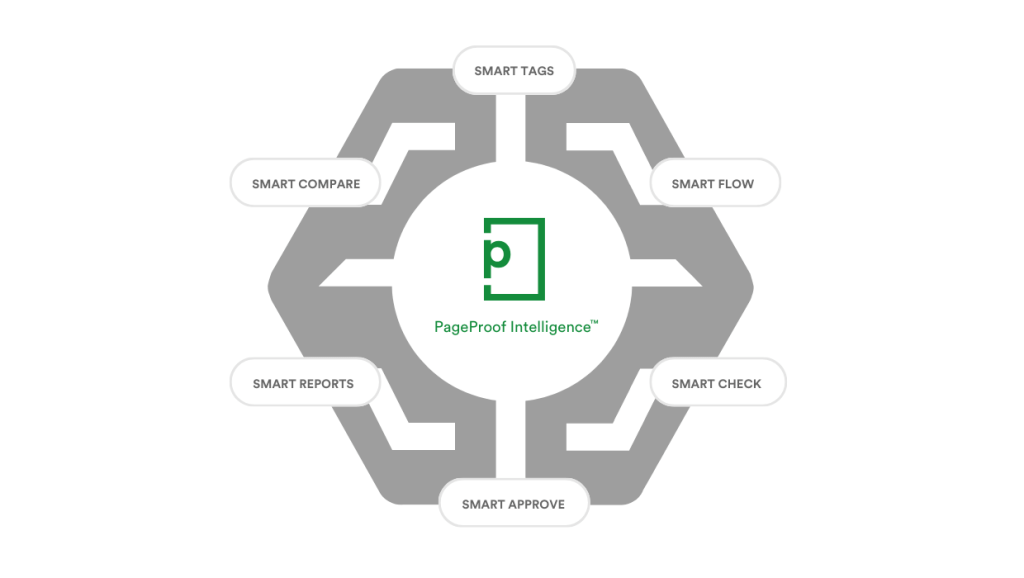
PageProof Intelligence™ amplifies the way marketing and creative teams review and approve creative content.
PageProof’s first PageProof Intelligence™ feature is Smart Tags. Smart Tags removes the need to rely on how the proof owner named and tagged the proof, and allows searching by describing the creative content. Finding proofs faster.
PageProof Intelligence™ is rolling out now, and continuing beyond 2024 to enhance and optimize review and approval of creative work.
FAQs
What is AI workflow automation?
AI workflow automation involves using artificial intelligence to automate repetitive tasks in workflows, boosting efficiency and productivity. In creative review and approval processes, AI can analyze content for adherence to brand guidelines, ensure compliance, and expedite feedback loops, significantly speeding up the overall review process while maintaining quality and consistency.
How can businesses effectively integrate AI into their processes?
Businesses can integrate AI effectively by pinpointing tasks like repetitive work and data analysis that AI can streamline. It’s key to target areas where AI can make a big difference, like review processes and customer service. Seamless integration across their tech tools is vital to maximize AI’s power. Also, ensuring strong support, training, and clear onboarding for employees is crucial for successful AI adoption.
Resources
https://www.qualtrics.com/blog/qualtrics-servicenow-customer-service-research
https://www.uschamber.com/co/run/technology/how-ai-benefits-businesses
https://www.visualcapitalist.com/visualizing-u-s-gdp-by-industry-in-2023/