How to give creative feedback to your design team

Great design doesn’t just happen. Most often, a team of people is involved in creating designs that inspire. Each member of that team brings a different skill set and vantage point. The key is working together and leveraging different strengths and creative viewpoints by communicating clearly with one another. Creativity thrives in a collaborative environment.
Key takeaways
- Anchor all feedback to the design’s objective to stay constructive and purposeful.
- Be specific about what’s working and what needs improvement—vague comments help no one.
- Encourage collaboration by listening to all perspectives, not just the loudest voices.
- Use a structured approach like the Ladder of Feedback to foster trust and clarity.
This is easier said than done. Often, ideas get lost in translation. From the first step of briefing in a vision to initial designs being created and the resulting feedback loop – there are many points in the design proofing process, where articulating a vision and providing feedback is vital.
There are repercussions if this is not done well. At a minimum, the design process is delayed when a discussion goes wrong. Our aim is to give you and your team key tips for providing feedback that inspires amazing design.
Be objective
When you first see a design concept, pause before giving your gut reaction. Whether positive or negative, you are providing a personal judgment rather than constructive feedback.
Feedback is best when it is related back to the original objective of the design brief or common practice. By measuring a design against its objective, you are analyzing the design to ensure that it meets the goal of the creative piece.
A basic critique framework to adopt is:
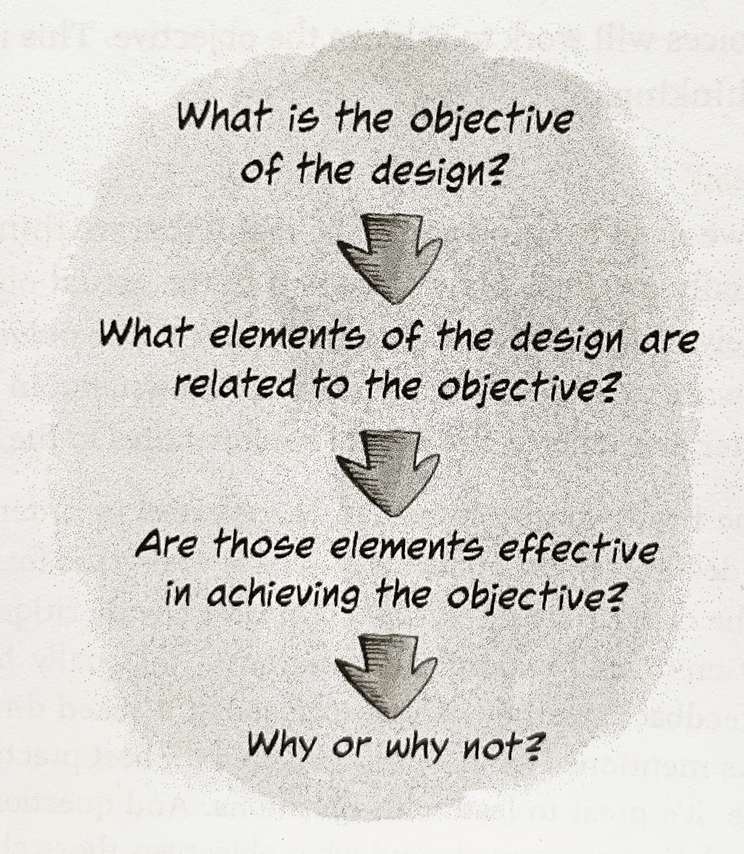
What is the objective of the design?
Clear objectives are vital to good design. Without design goals, you are designing with no obvious direction, purpose, and intent. Objectives not only guide your design process, but also allow you to measure your results against.
It is important that you include both the functional and non-functional qualities of a design.
Functionality in design is achieved by taking the pertinent information and making it easy for the viewer to understand and access. A question to check for functionality is: Does the design communicate its main purpose? To ensure clarity, it is advised to create a hierarchy of important information in your design.
Considerations for your design should include:
- what the core brand elements are
- who your target audience is
- what unique insights do you want to convey
- where this design will be seen or how it will be used.
Non-functional elements of design mean that it is aesthetically pleasing. Characteristics of good design are that it is:
- memorable
- clear
- credible
- relevant
- special and unique.
Be specific
To get to a final design that inspires, it is vital for the feedback to be specific. There is nothing worse than vague feedback. It leads to confusion about what things are working and what needs tweaking to meet your vision.
What elements of the design area are related to the objective?
When providing feedback, be clear about what parts of the design are not meeting its objective. Some example questions to consider:
- Is the logo, font styles, colors, etc, on-brand and conforming to brand guidelines?
- Does the background color choice and imagery convey the right feeling?
- Does the layout highlight the key piece of information and draw the eye of the audience?
- Could something use better alignment or is there something not in the right place?
- Are all the elements meeting the feel of the brief?
- Is it suitable and appealing to the target audience?
Be collaborative
Design is about collaboration. Every member of your team has different viewpoints that can add a valuable perspective to your design. Their views will be formed by their culture, past experiences, and the role they have in your team. To achieve a successful critique process, it is important that every opinion is heard.
We believe that sometimes the smallest voices can make the biggest impact.
PageProof
Are those elements effective in achieving the objective?
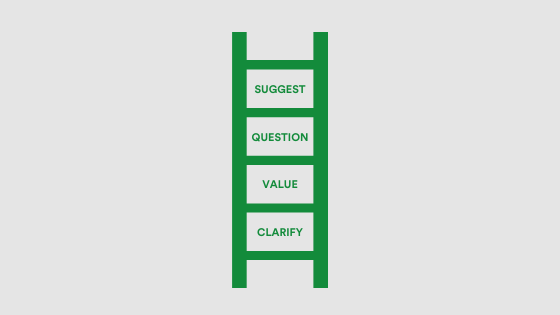
We suggest using a ladder of feedback when measuring designs against their objectives. By using this step-by-step process with your team, a structure is created for providing feedback. By beginning a conversation with clarifying understanding, it is said to encourage a culture of trust in your team.
The steps of providing objective feedback are:
- Clarify – by asking questions to clarify the design, you will gain an understanding of why a certain path was chosen.
- Value – comment on the strength of the work. Express what is working, is strong, shows thought, or is engaging about the design.
- Question & concerns – raise questions or concerns about the design. Share where you feel that the design is not meeting its objective.
- Suggest – suggest areas where you feel the design could be stronger. For reviewing designs, avoid problem-solving. It is important not to jump from analyzing to creative thinking. Your role is to review any design against the objective of the design.
Design feedback template
Use this template to guide your team’s feedback process and ensure it remains objective, specific, and collaborative.
Pro Tip: Reference the “Ladder of Feedback” above — Clarify → Value → Question → Suggest — to keep critique respectful and constructive.
1. Project details
- Project name:
- Designer(s):
- Review date:
- Reviewer name & role:
2. Design objective recap
(Refer to the original brief and goals to maintain alignment.)
- What is the primary goal of this design?
- Target audience:
- Where will this be used (e.g., social, print, web)?
3. What’s working
What elements do you think are strong or successful?
- Example: “The headline typography feels very on-brand and grabs attention.”
4. Questions or clarifications
Use this space to ask about design choices rather than assume intent.
- Why was this color palette selected?
- What was the reasoning behind this layout approach?
5. Concerns
Are there areas that don’t meet the objective or create confusion?
- Example: “The call-to-action button feels too muted; will it stand out enough on mobile?”
6. Suggestions for improvement
Offer actionable, objective suggestions without redesigning for the designer.
- Could we explore using a bolder image for better emotional impact?
- Maybe consider more contrast for better readability on small screens?
7. Team consensus & next steps
- Final notes from the team:
- Agreed next revisions (if any):
- Deadline for next iteration:
Summary
Creative design is subjective. Therefore, it is vital to provide your feedback in a constructive way. It is important to be objective by measuring your response against the goal of the design – both the functional and non-functional elements. Being specific about what your feedback relates to, avoids confusion. To build a culture of trust and creativity, be collaborative. Mastering the art of feedback means you may just inspire great design.